Ciemna ściana w małej łazience, zasady i materiały
Obawa przed ciemnymi ścianami w łazienkach o metrażu poniżej pięciu metrów kwadratowych to jeden z najczęstszych lęków osób planujących remont. Mit „ciemno = ciasno" ma jednak niewiele wspólnego z fizyką postrzegania barw w zamkniętej przestrzeni. Czerń i grafit potrafią optycznie powiększyć łazienkę nawet o piętnaście procent, o ile zachowasz równowagę między trzema elementami: źródłem światła, współczynnikiem odbicia powierzchni oraz proporcją kontrastujących płaszczyzn. Poniżej znajdziesz konkretną ścieżkę od koloru ściany, przez dobór płytek, aż po rozmieszczenie opraw oświetleniowych. Bez ogólników, bez przepłacania za marketingowy storytelling, za to z danymi technicznymi i mechanizmami, które za tym stoją.
- Jak dobrać kolor ciemnej ściany, by nie przytłoczyć wnętrza
- Oświetlenie i lustro, które ratują ciemną łazienkę
- Płytki i materiały na ciemną ścianę w małym metrażu
- Ciemna łazienka w bloku - specyfika remontu
- Pielęgnacja ciemnej łazienki - co widać, a co nie
- Ciemne ściany i mała łazienka - co łączyć stylistycznie
- Najczęstsze błędy w ciemnej łazience
- Trzy kroki na start
Jak dobrać kolor ciemnej ściany, by nie przytłoczyć wnętrza
Klucz do sukcesu leży w zrozumieniu, jak ludzkie oko interpretuje nasycenie barwy w połączeniu z otaczającym światłem. Ciemna ściana pochłania do dziewięćdziesięciu pięciu procent padającego na nią strumienia świetlnego, jasna odbija go od sześćdziesięciu do osiemdziesięciu procent. Kiedy w pomieszczeniu pojawia się choćby jedna ciemna płaszczyzna, mózg automatycznie kalibruje resztę przestrzeni jako jaśniejszą, przez co zyskuje ona głębię.
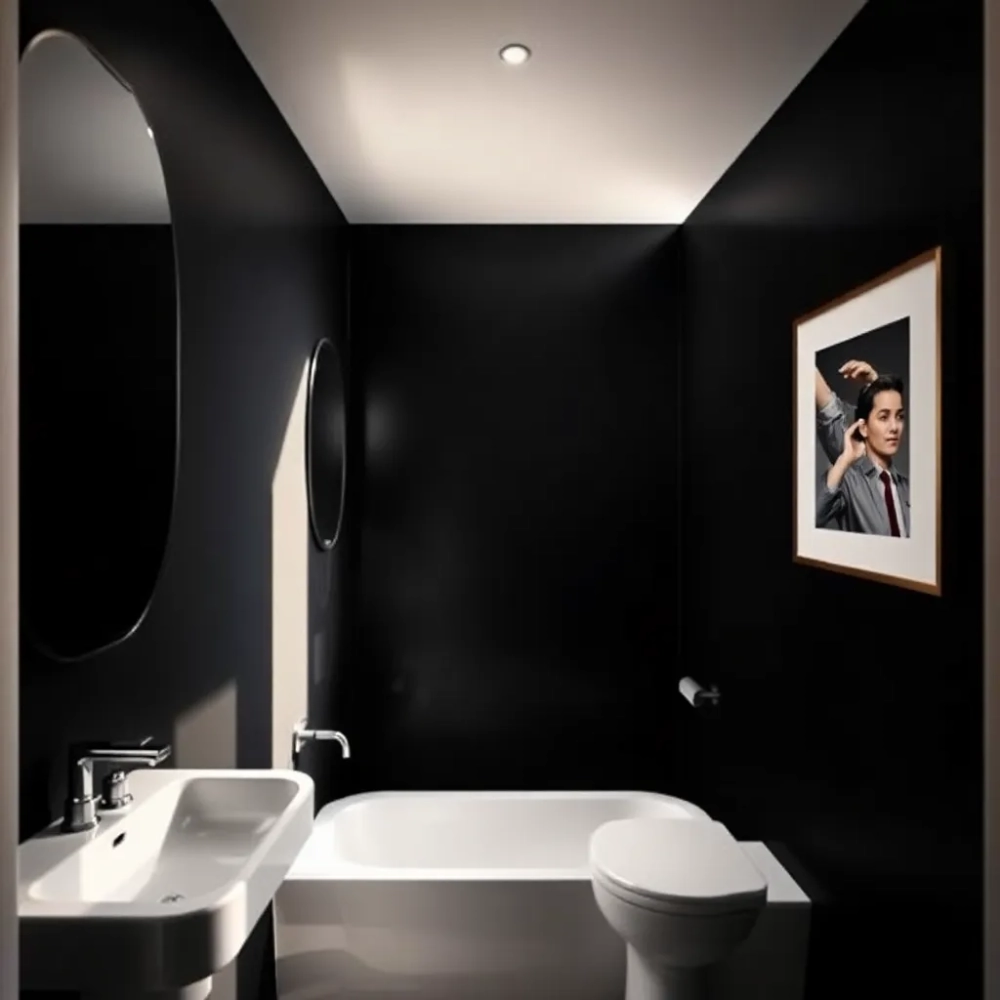
Sprawdzona zasada mówi: ciemnym kolorem pokrywamy maksymalnie jedną ścianę, a w pomieszczeniach poniżej czterech metrów kwadratowych - jedynie fragment ściany lub wnękę. Taki zabieg nie zmniejsza optycznie kubatury, a tworzy wyraźny punkt ogniskujący uwagę. Najczęściej wybieranym wariantem bywa ściana za lustrem lub ściana w strefie prysznica.
Kolory o najlepszych parametrach optycznych to głęboki grafit (RAL 7016, NCS S 8000-N), atramentowy granat (RAL 5004) oraz butelkowa zieleń (RAL 6004). Czerń pełna (RAL 9005) bywa ryzykowna w łazienkach bez okna, gdyż wymaga temperatury barwowej powyżej 3800 K, by nie „wciągała" całego światła. Wybierając farbę, szukaj na opakowaniu współczynnika LRV (Light Reflectance Value) - dla ciemnych ścian akceptowalne minimum wynosi pięć procent, poniżej tej wartości pomieszczenie zaczyna zachowywać się jak studnia bez dna.
Wielkoformatowe płyty wielkości minimum sześćdziesiąt na sześćdziesiąt centymetrów, a najlepiej sto dwadzieścia na sześćdziesiąt, pozwalają ukryć fugi, które na ciemnym tle tworzą siatkę drobnych linii rozpraszających wzrok. Fuga dobierana kolorystycznie do płytki (dopuszczalna odchylenie tonalne Delta E poniżej jednego) stapia się z powierzchnią, dając efekt jednorodnej tafli.
Kiedy ciemny kolor na ścianie nie zadziała
Pomieszczenie całkowicie pozbawione światła naturalnego oraz wyposażone w oprawy o mocy poniżej trzystu lumenów na metr kwadratowy nie udźwignie ciemnej ściany - kolor zacznie się „rozlewać" i zlewać z cieniami. Również niskie sufity (poniżej dwustu pięćdziesięciu centymetrów) tolerują jedynie ciemne powierzchnie pionowe, nigdy sufit, który obniży optycznie przestrzeń o kolejne kilkanaście procent.
Oświetlenie i lustro, które ratują ciemną łazienkę
W ciemnej łazience światło pełni rolę nie tyle dekoracyjną, co strukturalną. Odpowiednio rozmieszczone oprawy pozwalają czytać głębię koloru, eksponować strukturę płytek i podkreślać detale armatury. Normy europejskie (PN-EN 12464-1) rekomendują dla łazienek mieszkalnych od trzystu do pięciuset lumenów na metr kwadratowy. Przy czterech metrach kwadratowych daje to strumień całkowity od tysiąca dwustu do dwóch tysięcy lumenów.
Temperatura barwowa powinna być celowo zróżnicowana w zależności od strefy. Oświetlenie ogólne oraz strefa lustra wymagają czterech tysięcy kelwinów, by zachować neutralną biel i wierne oddanie odcieni skóry. Strefa prysznica oraz oświetlenie dekoracyjne mogą zejść do trzech tysięcy kelwinów, wprowadzając klimat domowego SPA. Unikaj opraw ażurowych i kinkietów z otwartym kloszem - rzucają one na ciemne ściany drobne, ostre cienie, które wizualnie „brudzą" powierzchnię.
Schemat trzech stref oświetlenia
| Strefa | Temperatura barwowa | Minimalny strumień | Rodzaj oprawy |
|---|---|---|---|
| Lustro | 4000 K | 800 lm | LED listwa lub plafon IP44 |
| Prysznic | 3000 K | 400 lm | Oprawa wpuszczana IP65 |
| Ogólna | 4000 K | 700 lm | Plafon sufitowy z dyfuzorem |
Lustro o szerokości co najmniej osiemdziesięciu centymetrów to absolutne minimum w pomieszczeniu z ciemną ścianą. Jego powierzchnia odbija od czterdziestu do pięćdziesięciu procent padającego światła, podwajając optycznie liczbę źródeł. Najlepiej sprawdzają się lustra bez ramy, z podświetleniem LED zintegrowanym z tyłu tafli - tworzą na ścianie miękką poświatę, która rozświetla ciemny kolor bez efektu „klatki".
Płytki i materiały na ciemną ścianę w małym metrażu
Wybór materiału determinuje nie tylko estetykę, ale przede wszystkim sposób, w jaki światło współgra z kolorem. Gres polerowany o współczynniku odbicia powyżej pięćdziesięciu procentów potrafi rozświetlić łazienkę niczej dodatkowe oprawy, ale w strefie prysznica wymaga klasy antypoślizgowości R10 lub R11 według normy DIN 51130. Matowy gres (R9) bezpieczniejszy, lecz pochłania więcej światła.
| Materiał | Efekt wizualny | Kiedy stosować | Cena PLN/m² | Kiedy unikać |
|---|---|---|---|---|
| Gres polerowany | Lustrzane odbicie, powiększenie | Ściany dekoracyjne, podłogi poza strefą mokrą | 90-180 | Strefa prysznica (śliskość), podłoga przy wannie |
| Gres matowy (R10) | Przytulność, tłumienie refleksów | Podłogi, ściany strefy mokrej | 70-140 | Pomieszczenia bez okna i mocnego oświetlenia |
| Beton architektoniczny | Loftowy charakter, głęboka tekstura | Akcent ścienny, zabudowy meblowe | 120-250 | Strefa prysznica bez impregnacji (porowatość) |
| Drewno egzotyczne (teak, iroko) | Ciepło, kontrast z chłodem ceramiki | Blaty, półki, okładziny wentylowane | 200-400 | Bezpośredni kontakt z wodą (paczenie powyżej 8% wilgotności) |
| Mozaika szklana | Połysk, gra światła w małych formatach | Wnęki, pasy dekoracyjne | 110-220 | Duże powierzchnie (koszt, pracochłonność fugowania) |
| Spiek kwarcowy | Jednorodność, zero fug | Okładziny ścienne, blaty | 180-350 | Podłoga (twardość, brak antypoślizgowości w wersji polerowanej) |
Beton architektoniczny w łazience wymaga impregnacji hydrofobowej co dwanaście do osiemnastu miesięcy, w przeciwnym razie chłonie wilgoć i zmienia odcień. Drewno egzotyczne pracuje w szerokim zakresie wilgotności (od sześciu do piętnastu procent), dlatego przy łazienkowej wentylacji na poziomie 50-60% wilgotności względnej wymaga olejowania co sześć miesięcy. Spiek kwarcowy, choć drogi, daje niemal zerową nasiąkliwość (poniżej 0,1%), więc sprawdza się w kabinach prysznicowych typu walk-in bez brodzika.
Płytki w budżecie do 100 PLN/m² vs premium
| Parametr | Budżet (do 100 PLN/m²) | Premium (powyżej 150 PLN/m²) |
|---|---|---|
| Tolerancja wymiarowa | ±0,8 mm | ±0,3 mm |
| Nasiąkliwość (E) | 0,5-3% | ≤0,1% |
| Odporność na plamienie | Klasy 3-4 | Klasa 5 |
| Trwałość koloru | 7-10 lat | 15-25 lat |
| Wzornictwo | Standardowe odcienie, powtarzalny druk | Cyfrowy druk HD, struktura 3D |
W łazienkach do czterech metrów kwadratowych w budżecie do dwóch tysięcy złotych na materiały ścienne sprawdza się gres rektyfikowany krajowych producentów w segmencie siedemdziesiąt - dziewięćdziesiąt PLN za metr kwadratowy. Różnica w cenie względem premium rzadko przekłada się na trwałość, częściej na głębię druku i precyzję krawędzi, co w ciasnej przestrzeni ma drugorzędne znaczenie.
Ciemna łazienka w bloku - specyfika remontu
Łazienki w budownictwie wielorodzinnym z lat siedemdziesiątych i osiemdziesiątych mają zwykle od trzech do czterech metrów kwadratowych, sufit dwieście pięćdziesiąt centymetrów i wentylację grawitacyjną o wydajności 50 m³/h. Te parametry wymuszają konkretne decyzje projektowe.
Przy niskim stropie ciemną płaszczyznę prowadzimy pionowo, unikając sufitu. Ciemny sufit obniża pomieszczenie wizualnie o dziesięć do piętnastu centymetrów, co w bloku bywa katastrofalne. Zamiast tego sufit pozostaje biały (LRV powyżej 80%), a ciemny akcent ląduje na ścianie, w której można ukryć szafki lub lustro.
Wentylacja w bloku bywa niewystarczająca przy ciemnych płytkach o niskim współczynniku LRV. Para wodna skrapla się na chłodniejszych ciemnych powierzchniach, a po wyschnięciu zostawia białawe zacieki widoczne zwłaszcza na graficie. Rozwiązanie: wentylator wyciągowy o wydajności minimum 100 m³/h z higrostatem (automatyczne włączenie przy wilgotności powyżej 70%) oraz kratka nawiewna w dolnej części drzwi (pole netto minimum 100 cm²).
Oświetlenie ciemnej łazienki z prysznicem
Kabina walk-in w ciemnej łazience potrzebuje odrębnego źródła światła o klasie szczelności co najmniej IP65 (norma PN-EN 60598). Oprawa wpuszczana LED o mocy siedmiu watów i strumieniu czterystu lumenów zamontowana nad głową użytkownika (wysokość dwa metry) daje natężenie około stu luksów w strefie prysznica, zgodnie z normą oświetlenia łazienek EN 12464-1.
Pielęgnacja ciemnej łazienki - co widać, a co nie
Ciemne powierzchnie maskują kurz lepiej niż jasne, ale bezlitośnie eksponują trzy rzeczy: białawe zacieki z twardej wody, odciski palców na matowych frontach oraz resztki kosmetyków (pasta, szampon). Świadomość tych słabych punktów pozwala dobrać materiały odporne na typowe łazienkowe zabrudzenia.
Matowe fronty meblowe bez powłoki anti-fingerprint to najczęstsza przyczyna frustracji w ciemnych łazienkach. W ciągu tygodnia pokrywają się warstwą tłuszczu, która pod światło jarzeniowe wygląda jak mgła. Powłoka AF (anti-fingerprint) w technologii lakierowania lub foliowania podnosi cenę o piętnaście do dwudziestu procent, ale eliminuje konieczność codziennego przecierania.
Gres polerowany wymaga impregnacji zaraz po ułożeniu i odnawiania co dwanaście miesięcy. Bez impregnacji otwarte mikropory na powierzchni chłoną mydło i olejki, tworząc trudne do usunięcia przebarwienia. Środki na bazie kwasu cytrynowego (pH 4-5) radzą sobie z osadami wapiennymi, ale stosowane regularnie niszczą fugę cementową. Fuga epoksydowa jest droższa o czterdzieści procent, lecz odporna na chemię i plamy, więc w ciemnej łazience zwraca się w ciągu trzech lat.
Ciemne ściany i mała łazienka - co łączyć stylistycznie
Cztery sprawdzone palety kolorystyczne porządkują wybór akcentów, armatury i dodatków. Każda z nich opiera się na kontraście temperaturowym (ciepły akcent vs chłodna baza) oraz proporcji 60/30/10.
Czarny i biały (klasyka modernistyczna)
Ściana RAL 9005, ceramika biała (RAL 9003), armatura chromowana. Minimalizm formy, geometryczne uchwyty, brak zbędnych dekoracji. Sprawdza się w łazienkach o regularnym kształcie i wyrazistej ceramice.
Grafit i złoto (glamour)
Ściana NCS S 8000-N, ceramika kremowa (RAL 1013), armatura szczotkowane złoto (PVD). Ciepła poświata złota odbija się w ciemnej płytce, tworząc efekt głębi bez konieczności mocnego oświetlenia.
Granat i drewno (japandi)
Ściana RAL 5004, ceramika biała, drewno teak na blatach i półkach. Japoński minimalizm spotyka skandynawską przytulność, a granatowa ściana pełni rolę nocnego nieba nad drewnianą oprawą.
Butelkowa zieleń i mosiądz (art déco)
Ściana RAL 6004, ceramika biała z czarnym wzorem geometrycznym, armatura polerowany mosiądz. Romantyczny mrok przełamany metalicznym połyskiem, świetny do łazienek z oknem i światłem dziennym.
| Styl | Kolor ściany | Akcent metaliczny | Drewno | Efekt wizualny |
|---|---|---|---|---|
| Klasyka | Czerń RAL 9005 | Chrom | Brak | Geometryczna czystość |
| Glamour | Grafit NCS 8000 | Złoto szczotkowane | Brak lub orzech | Ciepły blask |
| Japandi | Granat RAL 5004 | Stal szczotkowana | Teak, dąb | Medytacyjna cisza |
| Art déco | Butelkowa zieleń RAL 6004 | Mosiądz polerowany | Mahoń | Teatralna głębia |
Najczęstsze błędy w ciemnej łazience
Całe wnętrze utrzymane w jednym ciemnym kolorze, od podłogi po sufit, pozbawia oko punktów odniesienia i powoduje efekt „studni". Mózg nie potrafi oszacować głębokości pomieszczenia, gdy wszystkie powierzchnie mają identyczny LRV. Rozwiązanie to wprowadzenie minimum dwóch kontrastujących płaszczyzn: sufit jaśniejszy o czterdzieści procent LRV od ścian, podłoga jaśniejsza o dwadzieścia procent.
Brak wentylacji mechanicznej przy ciemnych płytkach o niskim LRV prowadzi do skraplania pary i powstawania zacieków wapiennych szczególnie widocznych na graficie. Łazienka z wentylacją wyłącznie grawitacyjną wymaga codziennego wietrzenia przez co najmniej piętnaście minut lub montażu wentylatora z higrostatem.
Matowe fronty meblowe bez powłoki anti-fingerprint już po tygodniu użytkowania wyglądają nieświeżo, odbijając tłuszcz i wilgoć. W ciemnej kolorystyce efekt potęguje się, ponieważ kontrast między tłustym śladem a suchą powierzchnią jest bardziej widoczny niż na jasnym froncie.
Trzy kroki na start
Po pierwsze, zmierz pomieszczenie i sprawdź LRV planowanego koloru ściany (minimum pięć procent). Po drugie, policz sumaryczny strumień świetlny opraw w łazience - powinien mieścić się w przedziale trzystu do pięciuset lumenów na metr kwadratowy. Po trzecie, zamów próbki płytek minimum dwudziestu na dwadzieścia centymetrów i oceń je w świetle dziennym oraz sztucznym o czterech tysiącach kelwinów, w pomieszczeniu, które będziesz remontować.
Jeśli szukasz sprawdzonych materiałów i konkretnych inspiracji do swojej ciemnej łazienki, zacznij od pobrania bezpłatnej check-listy zakupowej z listą pięciu pytań do sprzedawcy, tabelą materiałów i schematem trzech stref oświetlenia. Zapisz się, a otrzymasz dodatkowo kalkulator zużycia płytek dla pomieszczeń od trzech do sześciu metrów kwadratowych.
Źródła i normy
Dane techniczne oraz zalecenia projektowe opracowano na podstawie normy PN-EN 12464-1 (oświetlenie miejsc pracy - część 1: miejsca pracy we wnętrzach), normy DIN 51130 (klasy antypoślizgowości powierzchni), normy PN-EN 10545 (właściwości płytek ceramicznych), normy PN-EN 60598 (bezpieczeństwo opraw oświetleniowych), a także dokumentacji producentów krajowych i europejskich (karty techniczne, deklaracje właściwości użytkowych DoP). Współczynniki LRV zweryfikowano zgodnie z normą PN-EN ISO 11664-4 (kolorymetria). Zalecenia wentylacyjne oparto na rozporządzeniu Ministra Infrastruktury w sprawie warunków technicznych, jakim powinny odpowiadać budynki i ich usytuowanie (Dz.U. 2022 poz. 1225, §149-§155).